Court Notes Method
How to stress-test a padel shot tracker.
Scope, map, stress-test, correct, weigh — five questions that separate a tracker you can trust from a well-cut demo clip, before you spend money on any of them.
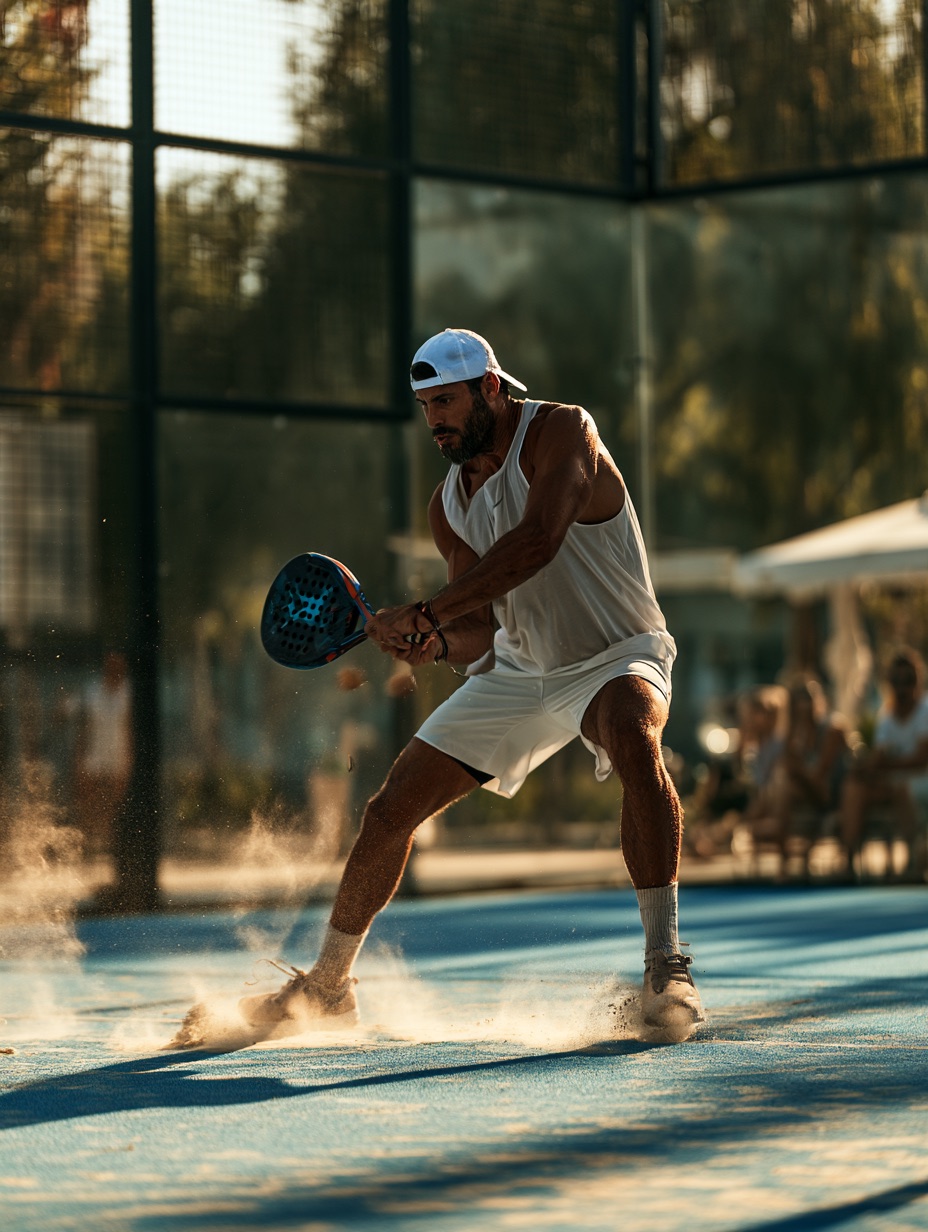
There’s no single best tracker — three approaches solve different problems. Racket-mounted sensors capture impact directly at the strings. Wrist-based trackers — a dedicated wrist sensor or a watch app like PlayDNA — infer shots from arm motion. Manual logging relies on you, or a basic activity classifier, to record what happened. Court Notes covers this three-way split in more depth if you want the full breakdown before choosing.
Each approach trades off differently on detection method, setup friction, and what happens when the classifier gets something wrong. The workflow below — scope, map, stress-test, correct, weigh — is how to compare them without taking a product page’s word for it.
The workflow: scope, map, stress-test, correct, weigh
1. Scope your goal
Decide what you need the data for before comparing hardware. Fixing a leaky backhand needs different granularity than tracking volume across a tournament weekend or comparing serve counts with a partner.
Worked example: a player preparing for a Saturday club tournament mostly needs total counts and serve consistency across three matches, not stroke-by-stroke detail. A player fixing a mistimed smash needs per-shot flags, even if the total sample is smaller.
2. Map the detection method
Every tracker senses from one of three positions: the racket, the wrist, or your own memory. Racket-mounted hardware sits closest to the ball but usually has to be attached to (and sometimes moved between) rackets. Wrist-based trackers travel with you across rackets and courts without remounting anything, but sit further from the point of contact. Manual logging skips hardware entirely and depends on you noticing and recording each shot.
That physical position is the root of most accuracy trade-offs you’ll run into later.
3. Stress-test the classifier
This is the step most buyers skip. Ask what happens on edge cases: short defensive blocks off the glass, low-compact swings, off-balance recoveries. A classifier tuned for full-swing smashes may miss short, low-velocity motions entirely.
Worked example: an underarm serve with a compact swing can fall below a sensor’s confidence threshold and go uncounted, rather than being logged as the wrong shot type. That’s a different failure mode than a racket sensor missing a shot because the ball caught the frame edge — and it matters if you rely on serve counts for match stats.
4. Check the correction path
No classifier is perfect, so the real question is what happens after a miss or a misclassification. Can you flag it? Does the app quietly average it into your stats, or show you the raw sample count so you can judge confidence yourself? If a product doesn’t explain what a low-confidence shot looks like in its own app, treat that as a gap rather than assuming the best.
5. Weigh ecosystem and privacy
Last, check what the tracker asks of you off the court: an account, cloud sync, a login just to see history. Some process shot data on-device and keep it there; others need sign-in before you can view anything at all. This is worth deciding early, since it’s hard to undo once your sessions live in someone else’s cloud.
Three player profiles
The tactical improver
Wants per-shot flags on backhand errors across a single session. A visible confidence threshold and a correction path matter more here than raw totals, since the goal is finding a pattern, not counting volume.
The tournament prepper
Wants aggregate serve and rally counts across a weekend, without remounting hardware between matches or rackets. Anything that survives racket switches has an edge over hardware bolted to one frame.
The partner comparator
Wants two players’ sessions to line up. This depends less on sensor position and more on whether both trackers use the same classification method — mixing a racket sensor’s log with a wrist tracker’s log for the same match won’t produce comparable numbers.
How to choose: matching tracker type to your goal
Racket-mounted sensors are worth considering if you always play with the same racket and want data closest to raw impact. Watch-based and manual logging ask the least of your wallet and setup, and the most of your memory mid-match.
PlayDNA is a wrist-based tracker — an Apple Watch app, so there’s no hardware to swap between rackets and no account to create — and its shot counts come with sample counts and coverage caveats rather than one unexplained number. A swing only enters your counts when the classifier is confident enough to name it; uncertain swings land in “unclassified” rather than being miscounted, which is why short, compact swings can go uncounted instead of logged as the wrong shot. That’s a trade-off worth weighing against racket-mounted alternatives if exact serve totals matter to you. Why we count shots at the wrist and why there is no account explain the reasoning behind both choices. Which padel shot tracker should you choose goes deeper on matching tracker type to playing style.
Common mistakes
Trusting a single demo clip as proof of accuracy
One smash detected correctly on camera says nothing about underarm serves or mishits — ask for edge-case examples, not highlight reels.
Ignoring what happens to low-confidence shots
A tracker that silently drops or force-counts uncertain shots will skew your totals without telling you; you want visibility into that decision, not just a final number.
Assuming racket and wrist data are interchangeable
Comparing a racket sensor’s session against a wrist tracker’s session treats two different classification methods as one, which breaks any comparison built on it.
Picking on setup speed alone
A tracker that takes two minutes less to set up but can’t answer your actual question is a waste of both minutes. Setup is a filter, not the decision.
FAQ
Does a wrist sensor detect shots as accurately as a racket-mounted sensor?
They detect differently rather than simply better or worse — a racket sensor reads impact directly, a wrist-based tracker infers the shot from arm motion, and each has different edge cases: mishits for one, short swings for the other. Ask any vendor how they handle low-confidence shots before assuming either is more accurate for your game.
Do I need an account to use a padel shot tracker?
It depends on the product. PlayDNA does not require one; other trackers, particularly cloud-synced apps, may require sign-in to store history across sessions.
Can I fix a shot the tracker misclassified?
This varies by product. Some show a raw sample count alongside how confident the classifier was, so you can judge a shot yourself; others average uncertain shots into your stats without flagging them. Whether a tool exposes that correction step to the player is worth confirming before you rely on its totals.
Is a watch-based or manual-logging app good enough for casual play?
For casual sessions where general trends matter more than exact counts, a watch or manual log can be sufficient. The trade-off shows up when you want granular, verified shot-by-shot data rather than a rough session summary.