Court Notes Method
Why we count shots at the wrist, not the racket.
A racket sensor sees the impact. A watch sees the whole arm before it. This is the case for the harder problem — and what it cost us to solve.
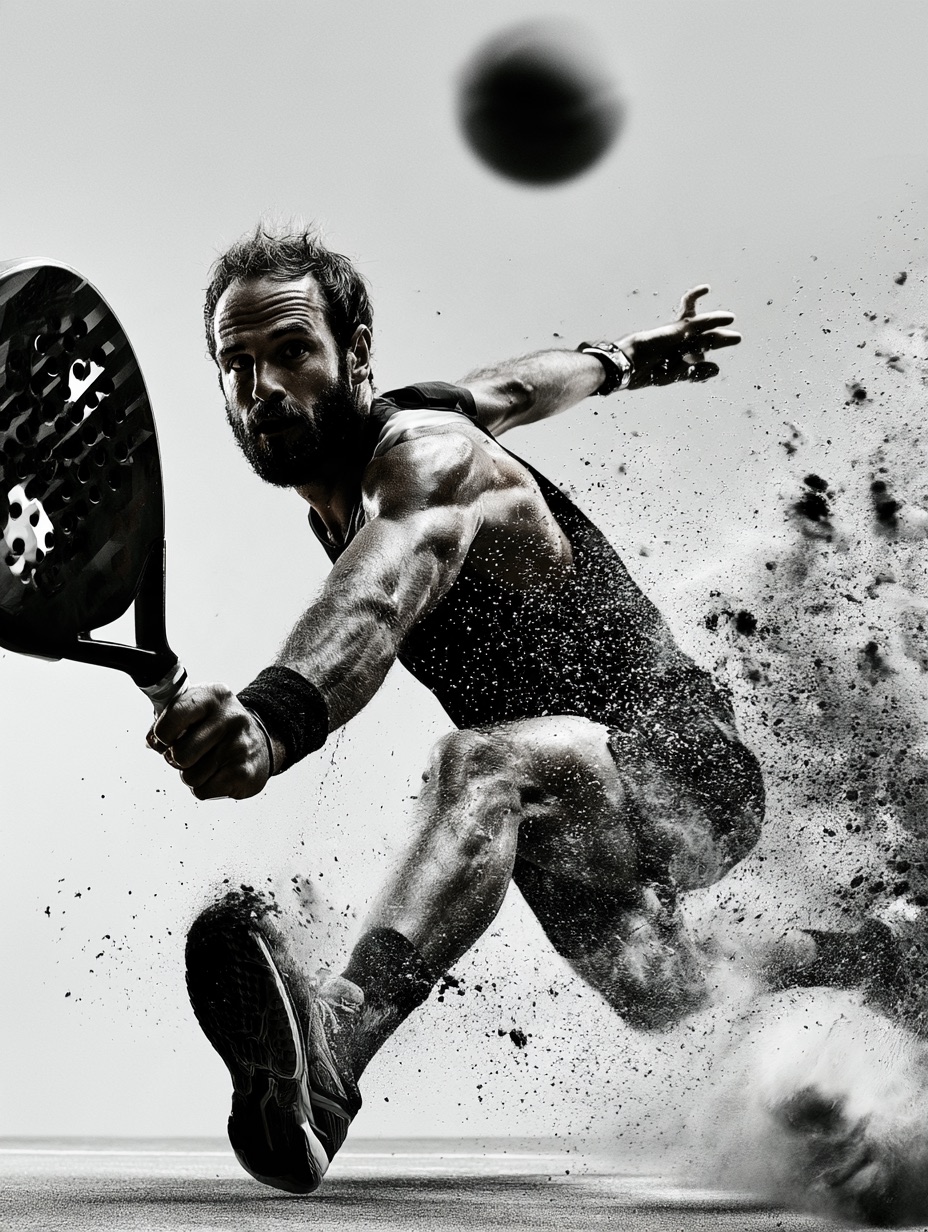
A racket sensor sees the impact. A watch sees the whole arm before it. This is the case for the harder problem — and what it cost us to solve.
01 — The impact is the easy part
Put an accelerometer in a racket handle and you get a very clean signal at exactly one moment: contact. It is a satisfying spike. It is also almost useless for telling a bandeja from a víbora, because by the time the ball hits the strings the two shots look the same.
The difference lives in the 200 milliseconds before that spike — in how the arm loads, where the elbow travels, how much the wrist pronates on the way in. None of that reaches the handle. All of it reaches the watch.
“The racket knows the ball was hit. The wrist knows what you meant to do with it.”
— FROM THE FIRST CLASSIFIER REVIEW, MARCH 2025
02 — What the wrist sees first
Apple Watch samples motion at 100 Hz. That is enough to see the wind-up as a shape rather than a blur: a bandeja loads late and flat, a víbora loads early and rolls. We do not need to see the ball at all. We need to see the intent, and the intent is written in the arm.
03 — The 412-shot afternoon
Numbers or it did not happen. In June we spent one afternoon in Lisbon collecting the validation set that would decide whether the eight-class classifier shipped or went back to the bench.
04 — Where we still miss
A wall shot played off the glass with a shortened swing still fools us roughly one time in five. We would rather show you that number than hide it behind a rounded-up total. When the classifier is unsure, the shot goes into “unclassified” and never into your counts. A guess in the receipt is worse than a gap in it.